A guide from your hosts
Two days in Zadar, done well
Zadar is not a city that asks to be conquered. It is three thousand years old, fits on a small peninsula, and does its best work at walking pace. Here is how we would spend two days in it, if we were lucky enough to be seeing it for the first time.
Day one: the peninsula
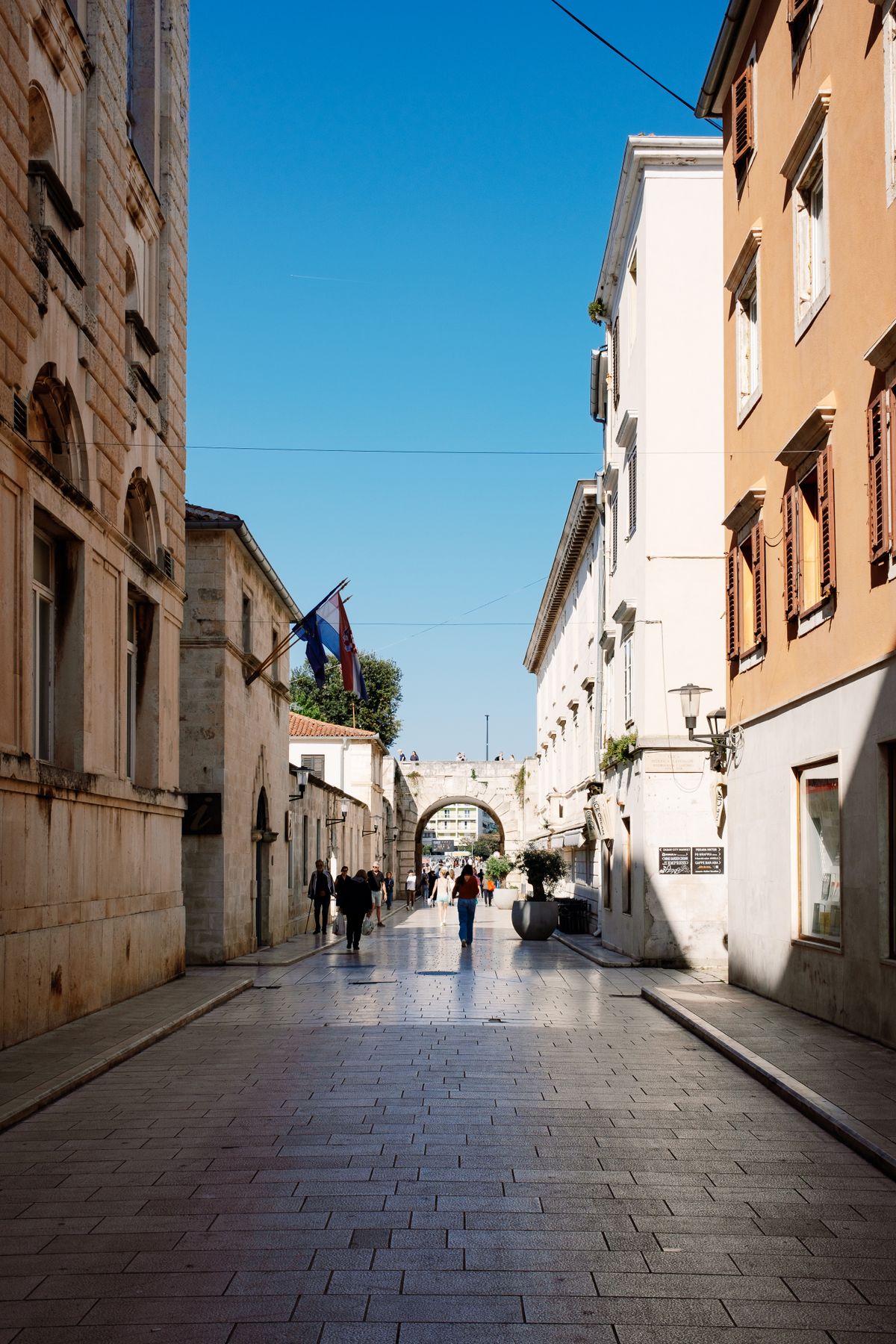
Start in the morning at the green market, where the town has bought its tomatoes and figs for centuries, and let that set the tone. From there everything is a few minutes on foot. The Roman forum lies open in the middle of town, with children climbing on column stumps that legionaries walked past. Beside it stands St Donatus, the strange and wonderful round church from the ninth century that has become the symbol of the city, and the bell tower next door is worth the climb for the view over the rooftops.
Walk Kalelarga, the main street that locals will tell you is older than the city itself, then drift along the walls. Zadar's Venetian fortifications are on the UNESCO list, and the Land Gate with its stone lion is the grandest way to enter or leave a town anywhere on this coast.
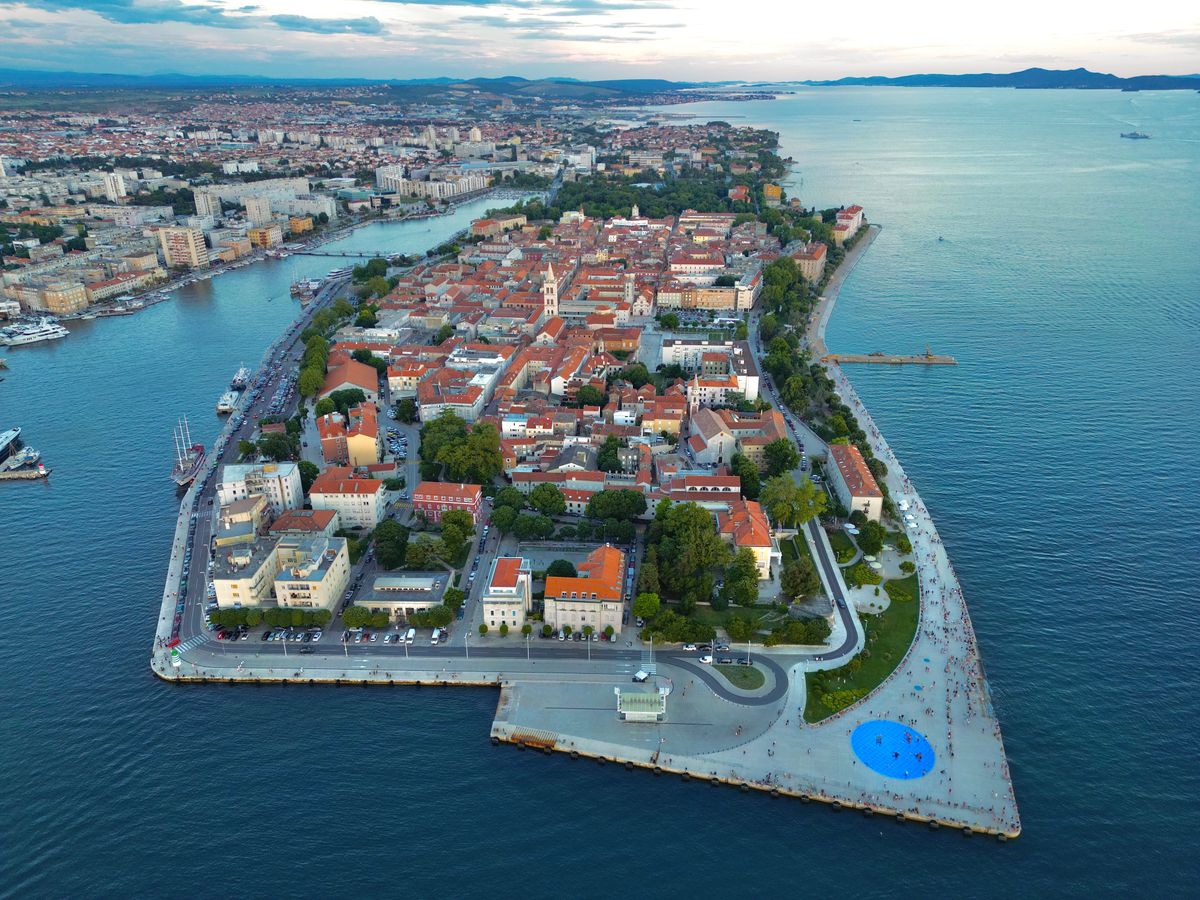
Then, the reason day one must end on the western tip of the peninsula. The Sea Organ is a run of wide marble steps with pipes hidden underneath, and the waves play it, quietly and endlessly. Sit on the warm stone, listen, and wait for the sun. Alfred Hitchcock declared Zadar's sunset the most beautiful in the world after a visit in 1964, and the town has not let anyone forget it, mostly because on a good evening he seems to have a point. When the light is gone, the Greeting to the Sun beside the organ starts to glow underfoot.
Day two: the sea, slowly
Zadar is a working town with a beach-town heart, and day two belongs to the water. Kolovare, the city beach, sits just outside the old town walls, with pines for shade and pensioners playing picigin in the shallows before the tourists wake up. The Borik area, out past our neighbourhood, has the long family-friendly stretches. And plenty of locals skip beaches altogether and swim off the ladders along the peninsula itself, drying off on the same stones the sunset crowd will occupy later.
If sitting still is not your family's talent, the ferry port is right there, and the island of Ugljan is a short crossing away. You will find quiet coves, olive groves, and the particular pleasure of eating lunch on an island while your car sits forgotten on the mainland.
In the evening, go back to the old town. It is a different place after dark, the stone still warm, the alleys full of slow traffic in flip flops, and gelato non-negotiable.
Practical bits
- Getting in: the old town is ten minutes from the villa by car, but parking near the walls is tight in season. The bus is painless, and we rent bicycles and electric scooters at the villa.
- Timing the organ: the Sea Organ plays loudest when boats pass or a breeze is up. Windless days are gentler, still lovely.
- Sunset seats: the steps fill from about an hour before sundown in summer. Come early, or bring patience.
- Two days is the town. The parks are the other reason people stay a week. See our guide to choosing between the five.